



Carbon Fiber
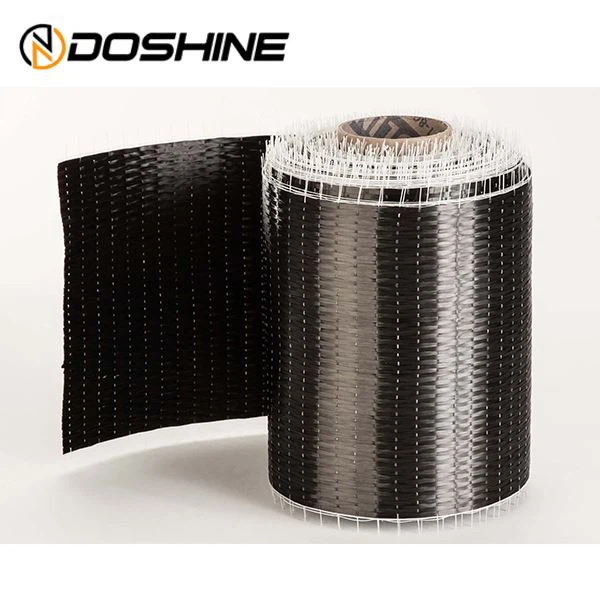
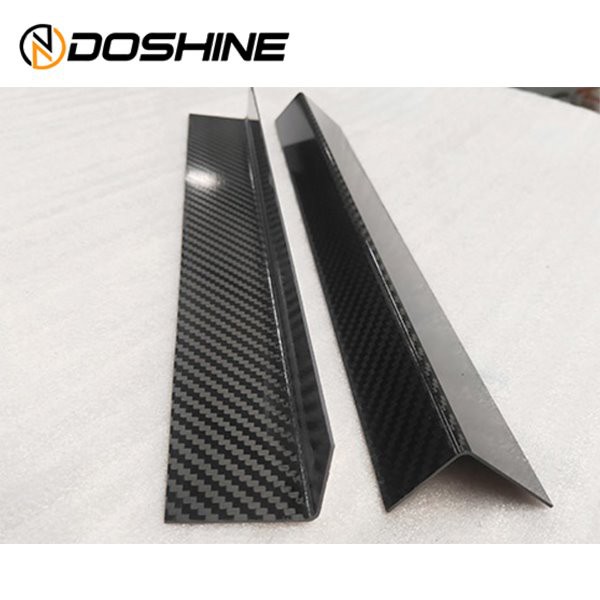
Carbon fiber is made of fiber treated with epoxy coating and pressed with graphite. Its advantages are light weight and high tensile strength. It may be the strongest of all synthetic handle materials with low density. Carbon fiber is also a highly processed material, so it is generally used in high-value products.
Excellent Team
We also have a very excellent team with professinal experiences for global purchasing. One of our competitive service is purchase agent service.
Our Service
Doshine adheres to the business philosophy of quality, innovation and service, strict manufacturing process, reliable performance quality, and mature manufacturing process technology.
Quick Response
We will reply you within 12 hours after receiving theinquiry.Tell us what you need. We have R&D team with abilities for new product customization.
Competitive Price
We can help customer search any product in China or Asia to get the best quality with lower cost. We will try our best to let you get a more efficient procurement.
Definition of Carbon Fiber
Carbon Fiber is a polymer and is sometimes known as graphite fiber. It is a very strong material that is also very lightweight. Carbon fiber is five-times stronger than steel and twice as stiff. Though carbon fiber is stronger and stiffer than steel, it is lighter than steel; making it the ideal manufacturing material for many parts. Uses of carbon fiber are found in a wide range of industries, with new applications being discovered daily. It makes airplanes more efficient, cars faster, drones lighter, and is even found in many luxury goods such as wallets, sunglasses, and belts.




Benefits of Carbon Fiber


High tensile strength and stiffness
The strength of carbon fiber comes from the reinforcing fibers: Thousands of microscopic strands of bonded carbon which by themselves are strong in tension, but lack stiffness and resistance to compression. By suspending them inside epoxy resin (a strong and lightweight plastic) they become stiff along their axis and strong in both tension and compression. This creates "non-isotropic" strength, meaning the strength of the material varies depending on the direction and orientation of the fibers. This contrasts with an "isotropic" material like steel which has the same properties regardless of alignment. When properly aligned, a carbon fiber part can have a strength comparable to the best steel at a small fraction of the weight. This makes carbon fiber a great replacement for metals like aluminum and steel because it's strength can be tailored exactly to its load scenario.
Lightweight
Speaking of weight, carbon fiber is light! A carbon fiber reinforced plastic isn't much heavier than a non-reinforced plastic. When compared to steel, the overall weight reduction is about ninety percent. A 70 pound steel car hood can be re-created to weight a mere 7 pounds! It's lighter than aluminum and even titanium. The soon-to-be-released polestar one sports-car developed by volvo, for example, saves over 500 pounds with strategic use of carbon fiber, while at the same time improving stiffness in key areas. Cf's carbon fiber sunglasses are so light they only weigh 20 grams; that's equivalent to just six pennies!
Suitable for a variety of uses
In addition to its extensive use in the high-end automotive world, carbon fiber is being applied in almost every field you can imagine. Hikers love its lightweight properties in backpacks and tents and drones, planes, and helicopters can significantly improve their power-to-weight ratios. Don't be surprised if carbon fiber pops up in a luxury rv, the emergency room, a musical instrument, or your next bicycle. In fact, cf has made products for each of those applications! Ever tried to lift a couch and wished it weighed a little less? You're not the only one, and carbon-fiber furniture is starting to save over-stressed spines, one at a time. Despite carbon fiber being know for being a bit itchy, there is even a company making carbon fiber apparel t-shirts now!
Doesn't rust
Most materials react poorly to air and water, corroding, oxidizing, or simply breaking down unless protected. Not carbon fiber. Both the carbon and the epoxy resin are extremely stable and non-reactive, even when submerged in water! Ideal as a replacement for steel under conditions of extreme moisture or even submersion. There's no need for expensive anti-corrosion treatments or continual re-painting.
Transparent to x-rays
Despite being stronger than steel, carbon fiber is totally transparent to x-rays. The medical applications for this are boundless, as no other material combines the strength of metal with the x-ray transparency of plastic. Imagine if instead of having to wheel a patient to a whole new room for an x-ray, they could simply be imaged live through an operating table! Carbon fiber is unlocking this and other applications, creating new and exciting possibilities for doctors and surgeons.
Won't bend or change shape in hot weather
By using a high-temperature epoxy resin carbon fiber can be made to withstand extreme heat and cold with essentially no warping or change in size. This is due to carbon fiber's property of low thermal expansion. Musicians have long dreamt of a guitar, harp, or violin that never go out of tune. Carbon fiber is bringing that dream to life, building musical instruments that don't expand or contract when exposed to heat, cold, and humidity. Now instruments can survive exposure to the elements, rough handling, travel, and more, all while weighing less and offering decades of service. It can still be wise to coat carbon fiber with a clear-coat to protect it from its one weakness: Uv exposure. With a proper coating, however, a carbon fiber part can survive years of sun-exposure.
Resistant to chemicals
Carbon fiber (in its rigid form) is typically used in unison with a polymer matrix. Most commonly carbon fiber is paired with an epoxy resin system. Epoxy is formed from a two-part chemical reaction of a resin and a hardener. Once cured, epoxy is a thermoset that will not melt or return to its former constituents. This makes for a highly chemical resistant plastic that will not corrode, dissolve, or melt over time. This epoxy is what makes carbon fiber so chemically resistant to most alcohols, acids, and other chemical compounds.
Good heat conductor
At the atomic level, carbon fiber is composed of the same material that forms charcoal—carbon. Due to a property know as thermal conductivity, heat is readily conducted along the length of the fibers. Carbon fibers have a thermal conductivity of about 500 w/mk (watts per meter-kelvin), compared with about 200 w/mk for aluminum or 400 w/mk for copper. However, heat doesn't conduct perpendicularly to the fibers which allows the flow of heat to be controlled through the part by arranging the direction of the fibers to create the desired thermal properties.
Flexibility and malleability
Prior to the lay-up process carbon fiber can be conformed to nearly any shape, although significant experience and technical know-how is required to adapt the process and material to various geometries. That's not where it ends though. Composites can be made to be either flexible or stiff, but not both. A single continuous piece of carbon fiber can be made to bend along a single axis while still maintaining most of its tensile strength. Carbon fiber brackets can be bent like steel, fashion accessories can be made with that extra bit of flare, and countless new applications are waiting to be discovered. Common fibers' wallets were the first example of this carbon fiber hinge.
Visual appearance and aesthetics
If there's one attribute nearly everyone knows about carbon fiber, it's the instantly recognizable look. From the aggressive shark-tooth pattern, the depth, and the way it catches the light, carbon fiber can't be missed! The fibers that provide that stunning appearance are more than decorative—they're also the structure and strength of the part, like an insect's exoskeleton. Whether it's a super-car made almost entirely of carbon, a simple accent on a piece of furniture, or simply a wallet or knife you carry every day, carbon fiber is beautiful, striking, and bold. Carbon fiber can now even be woven into other patterns or with other materials to add some color. Carbon fiber by itself cannot be any color other than black.
Can be combined with other materials
The lay-up process involves sandwiching many layers of carbon fiber together and often a manufacturer will choose to insert a different material into the lay-up to create different properties. Foam can be used to increase thickness with minimal increase in weight. Wood is vastly cheaper than carbon and adds flexibility and springiness. Even metal can be laminated to carbon, creating a truly remarkable composite material. The possibilities are nearly endless. That's the magic of composite materials, and technicians and scientists are continually inventing new and innovative combinations of the material.
How is Carbon Fiber Made
Carbon fiber is made from a process that is part chemical and part mechanical. It starts by drawing long strands of fibers and then heating them to a very high temperature without allowing contact to oxygen to prevent the fibers from burning.
This is when the carbonization takes place, which is when the atoms inside of the fibers vibrate violently, expelling most of the non-carbon atoms. This leaves a fiber composed of long, tightly inter-locked chains of carbon atoms with only a few non-carbon atoms remaining. A typical sequences used to form carbon fibers from polyacrylonitrile involves spinning, stabilizing, carbonizing, treating the surface and sizing.

Carbon fiber is a high-performing material used in a variety of industries. Ninety per cent of today's carbon fibers are made from polyacrylonitrile, which in turn is manufactured from products that come from petroleum. Weight and strength properties have resulted in the material being widely used in sports equipment, especially in elite-level competition.
Carbon fiber is used for its strength-to-weight ratio and performance properties to manufacture bike frames, wheels, forks, stems, seat posts, and shoes. Carbon fiber allows people to outperform themselves compared to other materials and make the riding experience more comfortable. The use of the material is growing, and sport represents the third largest user of the material behind aerospace and the wind turbine industry.
Like any material that requires a long and complex manufacturing process, carbon fiber has the potential to have a heavy effect on the environment. Carbon fiber production is energy-intensive; it is difficult to recycle and not biodegradable. Carbon fiber cannot be remelted and recycled like aluminium, and until recently, no sustainable end-of-life solution has been available for carbon fiber.
In the carbon fiber production process, the raw materials, called precursors, are drawn into long strands of fibres. The fibres are then woven into a fabric. They can also be combined with other materials that are filament wound or molded into desired shapes and sizes.
The manufacturing process is as follows:
• Spinning. PAN mixed with other ingredients and spun into fibres, which are washed and stretched.
• Stabilizing. Chemical alteration to stabilize bonding.
• Carbonizing. Stabilized fibres heated to a very high temperature to form tightly bonded carbon crystals.
• Treating the surface. The surface of fibres is oxidized to improve bonding properties.
• Sizing. Fibres are coated and wound onto bobbins. These are then loaded onto spinning machines that twist the fibres into different size yarns.
Instead of being woven into fabrics, fibres may be formed into composites. To form composite materials, heat, pressure or a vacuum can be used to bind fibres together with a plastic polymer.

Electric contacts were inserted into a carbon fiber epoxy resin composite to research the relationship between water absorption and resistance, which allowed the diagnosis of composite water absorption in a nondestructive way. The results show that the carbon fiber in the composite form does not absorb water from the environment, and its resistance remained unchanged when immersed in water.
However, the resistance of the composite increased after water was absorbed along the fiber until the specimen reached saturation, which resulted in a sudden increase in resistance. The transverse resistance changed logarithmically in relation to water absorption. The data fitting equation is y = 2.03 × lg(x)−6.26 (R2 = 0.98), where x is the transverse resistance after water absorption (Ω), and y is the weight gain rate after water absorption (%). According to this equation, the weight gain rate of the composite can be calculated from the transverse resistance.
The Role of Carbon Black Pigment in Carbon Fiber Production
Carbon black pigment: Composition and properties
Carbon black pigment is a fine, powdered form of elemental carbon produced by the incomplete combustion of hydrocarbons. It has a high surface area, which imparts excellent electrical conductivity and provides an ideal surface for chemical reactions. Carbon black pigment is known for its intense black color, high opacity, and ultraviolet (UV) stability, making it suitable for various applications in coatings, plastics, and rubber industries.
Role in carbon fiber production
Carbon black pigment is introduced during the manufacturing process of carbon fibers to enhance their mechanical and electrical properties. The pigment is typically added to the precursor material, which is usually a polymer-based substance like polyacrylonitrile (pan) or pitch. The carbon black pigment serves as a nucleating agent during the stabilization stage, where the precursor material is heated in an oxygen-free environment to create a stable carbon-rich structure.
Enhanced mechanical properties
One of the key advantages of incorporating carbon black pigment in carbon fiber production is the improvement in mechanical properties. The presence of the pigment creates nucleation sites, which promote the formation of a well-organized carbon lattice during stabilization. This, in turn, results in carbon fibers with higher tensile strength, stiffness, and fatigue resistance. The improved mechanical properties make these carbon fibers ideal for structural applications, where high strength-to-weight ratios are essential.
Electrical conductivity
Carbon black pigment's inherently high electrical conductivity enhances the electrical properties of carbon fibers. It ensures the rapid dissipation of electrical charges, making them suitable for applications in electrical and electronic components. Carbon fibers with carbon black pigment are widely used in electromagnetic shielding, antistatic materials, and composite structures for aerospace and defense industries.
UV stability
The UV stability of carbon black pigment provides crucial protection to carbon fibers against degradation caused by prolonged exposure to sunlight and other uv sources. Unprotected carbon fibers are susceptible to degradation, which can lead to reduced mechanical performance over time. By incorporating carbon black pigment, manufacturers can significantly extend the lifespan and performance of carbon fiber-based products exposed to outdoor environments.
Challenges and considerations
While carbon black pigment offers numerous advantages, its excessive use can lead to certain challenges. An excessively high concentration of pigment can decrease the overall mechanical properties of carbon fibers and hinder the effectiveness of the stabilization process. Manufacturers must carefully calibrate the amount of pigment added to strike the right balance between desired properties and process efficiency.
Does Carbon Fiber Melt Easily
The fibers of carbon fiber woven fabrics, nylon spacer fabrics, and LMPET nonwoven fabrics become firmly entangled due to the employment of the needle-bonding process. The barbed needles efficiently moved and bonded the fibers with different layers, thereby mechanically strengthening the composites, which was deemed to be a typical result of the needle-bonded process for nonwoven fabrics. To further improve the mechanical properties of the composites, a roller hot presser was used to melt the LMPET fibers, which, in turn, formed thermal bonding points.
Carbon fiber woven fabrics can withstand temperatures that exceed 1500 °C. The melting point is 235 °C for nylon, but low-melting-point polyester fibers are composed of a core–skin structure, where the melting point was 265 °C for the core and 110 °C for the skin. As the hot pressing temperature was 130 °C, the skin of the LMPET fibers was melted to form thermal bonding points. As indicated by the red circles, the skin of the LMPET fibers was transformed into thermal bonding points that adhered to the other fibers, e.g., carbon fibers, as indicated by the yellow circles, and nylon fibers, as indicated by the white rectangles. Moreover, regardless of the lamination order, all sample groups demonstrated thermal bonding via LMPET fibers as a result of the employment of hot pressing.

JIAXING DOSHINE NEW MATERIAL CO., LTD. is the leading global supplier of various high performance materials. We are mainly supplying carbon fiber prducts (chopped strands, veil, cloth, and other related products), aramid fiber products, basalt fiber products, and other new materials.
These products are widely used in automobile parts, pressure vessel, hull, sports equipment, medical equipment, sound trough, friction and seal material.
2012, Doshine(Hongkong) company established, and we have our first team to service our customers which have been exporting various of materials to the oversea markets.
We also can supply a wide range of products to meet ever-changing market demands. Customized orders are welcomed. Trust us, and we will try our best to let you get a more efficient procurement.