



Carbon Fiber Products
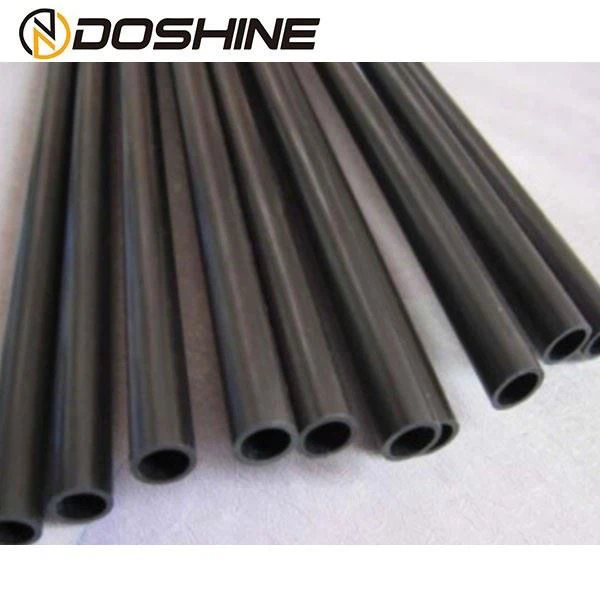
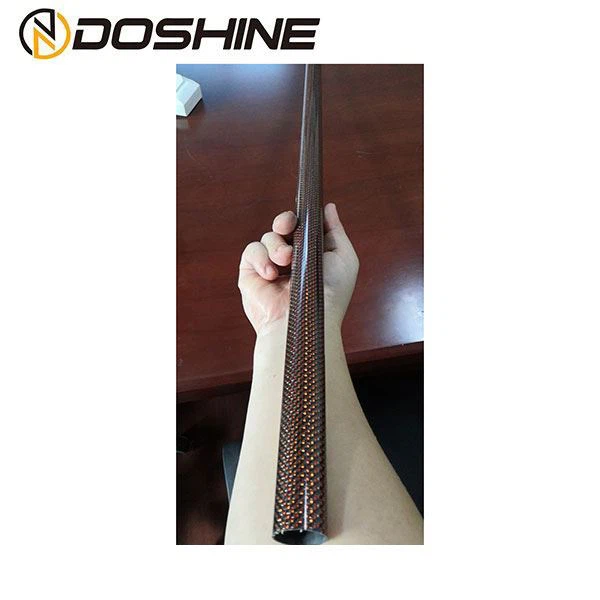
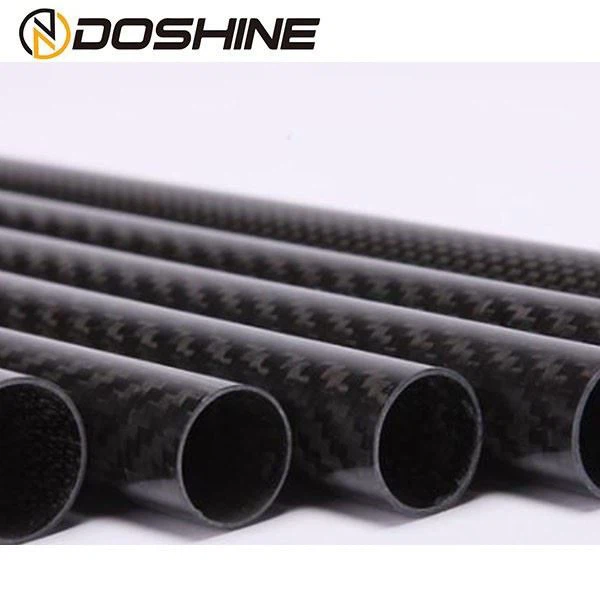
Carbon fiber products are products made of carbon fiber as raw materials, such as solidified pipes, auto parts, etc. due to the advantages of carbon fiber, the products have superior performance and sense of science and technology at the same time.
Excellent Team
We also have a very excellent team with professinal experiences for global purchasing. One of our competitive service is purchase agent service.
Our Service
Doshine adheres to the business philosophy of quality, innovation and service, strict manufacturing process, reliable performance quality, and mature manufacturing process technology.
Quick Response
We will reply you within 12 hours after receiving theinquiry.Tell us what you need. We have R&D team with abilities for new product customization.
Competitive Price
We can help customer search any product in China or Asia to get the best quality with lower cost. We will try our best to let you get a more efficient procurement.
Definition of Carbon Fiber Products
Carbon fiber products is a material consisting of thin, strong crystalline filaments of carbon, essentially carbon atoms bonded together in long chains. The fibers are extremely stiff, strong, and light, and are used in many processes to create excellent structural materials. Carbon fiber products is five-times stronger than steel and twice as stiff. Though carbon fiber is stronger and stiffer than steel, it is lighter than steel. Carbon fiber products include those used in the manufacture of aircraft and spacecraft parts, racing car bodies, golf club shafts, bicycle frames, fishing rods, car springs, sailboat masts and many other components that require lightweight and high strength.


Benefits of Carbon Fiber Products
High tensile strength and stiffness
The strength of carbon fiber products comes from the reinforcing fibers: Thousands of microscopic strands of bonded carbon which by themselves are strong in tension, but lack stiffness and resistance to compression. By suspending them inside epoxy resin (a strong and lightweight plastic) they become stiff along their axis and strong in both tension and compression. This creates "non-isotropic" strength, meaning the strength of the material varies depending on the direction and orientation of the fibers. This contrasts with an "isotropic" material like steel which has the same properties regardless of alignment. When properly aligned, a carbon fiber products part can have a strength comparable to the best steel at a small fraction of the weight. This makes carbon fiber products a great replacement for metals like aluminum and steel because it's strength can be tailored exactly to its load scenario.
Lightweight
Speaking of weight, carbon fiber products is light! A carbon fiber products reinforced plastic isn't much heavier than a non-reinforced plastic. When compared to steel, the overall weight reduction is about ninety percent. A 70 pound steel car hood can be re-created to weight a mere 7 pounds! It's lighter than aluminum and even titanium. The soon-to-be-released polestar one sports-car developed by volvo, for example, saves over 500 pounds with strategic use of carbon fiber products, while at the same time improving stiffness in key areas. Cf's carbon fiber products sunglasses are so light they only weigh 20 grams; that's equivalent to just six pennies!
Suitable for a variety of uses
In addition to its extensive use in the high-end automotive world, carbon fiber products is being applied in almost every field you can imagine. Hikers love its lightweight properties in backpacks and tents and drones, planes, and helicopters can significantly improve their power-to-weight ratios. Don't be surprised if carbon fiber products pops up in a luxury rv, the emergency room, a musical instrument, or your next bicycle. In fact, cf has made products for each of those applications! Ever tried to lift a couch and wished it weighed a little less? You're not the only one, and carbon-fiber furniture is starting to save over-stressed spines, one at a time. Despite carbon fiber products being know for being a bit itchy, there is even a company making carbon fiber products apparel t-shirts now!
Doesn't rust
Most materials react poorly to air and water, corroding, oxidizing, or simply breaking down unless protected. Not carbon fiber products. Both the carbon and the epoxy resin are extremely stable and non-reactive, even when submerged in water! Ideal as a replacement for steel under conditions of extreme moisture or even submersion. There's no need for expensive anti-corrosion treatments or continual re-painting.
Transparent to x-rays
Despite being stronger than steel, carbon fiber products is totally transparent to x-rays. The medical applications for this are boundless, as no other material combines the strength of metal with the x-ray transparency of plastic. Imagine if instead of having to wheel a patient to a whole new room for an x-ray, they could simply be imaged live through an operating table! Carbon fiber products is unlocking this and other applications, creating new and exciting possibilities for doctors and surgeons.
Won't bend or change shape in hot weather
By using a high-temperature epoxy resin carbon fiber products can be made to withstand extreme heat and cold with essentially no warping or change in size. This is due to carbon fiber products's property of low thermal expansion. Musicians have long dreamt of a guitar, harp, or violin that never go out of tune. Carbon fiber products is bringing that dream to life, building musical instruments that don't expand or contract when exposed to heat, cold, and humidity. Now instruments can survive exposure to the elements, rough handling, travel, and more, all while weighing less and offering decades of service. It can still be wise to coat carbon fiber products with a clear-coat to protect it from its one weakness: Uv exposure. With a proper coating, however, a carbon fiber products part can survive years of sun-exposure.
Resistant to chemicals
Carbon fiber products (in its rigid form) is typically used in unison with a polymer matrix. Most commonly carbon fiber products is paired with an epoxy resin system. Epoxy is formed from a two-part chemical reaction of a resin and a hardener. Once cured, epoxy is a thermoset that will not melt or return to its former constituents. This makes for a highly chemical resistant plastic that will not corrode, dissolve, or melt over time. This epoxy is what makes carbon fiber products so chemically resistant to most alcohols, acids, and other chemical compounds.
Good heat conductor
At the atomic level, carbon fiber products is composed of the same material that forms charcoal - carbon. Due to a property know as thermal conductivity, heat is readily conducted along the length of the fibers. Carbon fiber productss have a thermal conductivity of about 500 w/mk (watts per meter-kelvin), compared with about 200W/mk for aluminum or 400 w/mk for copper. However, heat doesn't conduct perpendicularly to the fibers which allows the flow of heat to be controlled through the part by arranging the direction of the fibers to create the desired thermal properties.
Flexibility and malleability
Prior to the lay-up process carbon fiber products can be conformed to nearly any shape, although significant experience and technical know-how is required to adapt the process and material to various geometries. That's not where it ends though. Composites can be made to be either flexible or stiff, but not both. A single continuous piece of carbon fiber products can be made to bend along a single axis while still maintaining most of its tensile strength. Carbon fiber products brackets can be bent like steel, fashion accessories can be made with that extra bit of flare, and countless new applications are waiting to be discovered. Common fibers' wallets were the first example of this carbon fiber products hinge.
Visual appearance and aesthetics
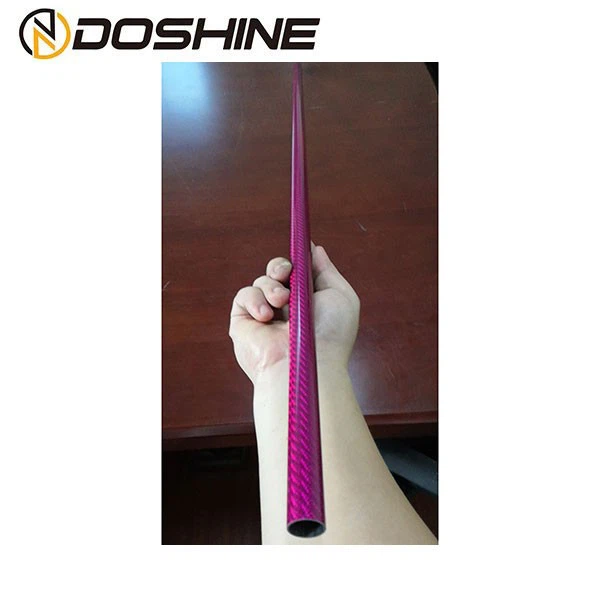
If there's one attribute nearly everyone knows about carbon fiber products, it's the instantly recognizable look. From the aggressive shark-tooth pattern, the depth, and the way it catches the light, carbon fiber products can't be missed! The fibers that provide that stunning appearance are more than decorative - they're also the structure and strength of the part, like an insect's exoskeleton. Whether it's a super-car made almost entirely of carbon, a simple accent on a piece of furniture, or simply a wallet or knife you carry every day, carbon fiber products is beautiful, striking, and bold. Carbon fiber products can now even be woven into other patterns or with other materials to add some color. Carbon fiber products by itself cannot be any color other than black.
Can be combined with other materials
The lay-up process involves sandwiching many layers of carbon fiber products together and often a manufacturer will choose to insert a different material into the lay-up to create different properties. Foam can be used to increase thickness with minimal increase in weight. Wood is vastly cheaper than carbon and adds flexibility and springiness. Even metal can be laminated to carbon, creating a truly remarkable composite material. The possibilities are nearly endless. That's the magic of composite materials, and technicians and scientists are continually inventing new and innovative combinations of the material.
Carbon Fiber In Flight
Carbon fiber products has gone to the moon on spacecraft, but it is also used widely in aircraft components and structures, where its superior strength to weight ratio far exceeds that of any metal. 30 percent of all carbon fiber is used in the aerospace industry. From helicopters to gliders, fighter jets to microlights, carbon fiber products is playing its part, increasing range and simplifying maintenance.
Sporting Goods
Its application in sports goods ranges from the stiffening of running shoes to ice hockey sticks, tennis racquets, and golf clubs. "Shells" (hulls for rowing) are built from it, and many lives have been saved on motor racing circuits by its strength and damage tolerance in body structures. It is used in crash helmets too, for rock climbers, horse riders, and motorcyclists – in fact in any sport where there is a danger of head injury.
Military
The applications in the military are very wide-ranging – from planes and missiles to protective helmets, providing strengthening and weight reduction across all military equipment. It takes energy to move weight – whether it is a soldier's personal gear or a field hospital, and weight saved means more weight moved per gallon of gas.
A new military application is announced almost every day. Perhaps the latest and most exotic military application is for small flapping wings on miniaturized flying drones, used for surveillance missions. Of course, we don't know about all military applications – some carbon fiber products uses will always remain part of "black ops"- in more ways than one.
Carbon Fiber at Home
The uses of carbon fiber products in the home are as broad as your imagination, whether it is style or practical application. For those who are style-conscious, it is often tagged as "the new black". If you want a shiny black bathtub built from carbon fiber or a coffee table then you can have just that, off the shelf. Phone cases, pens, and even bow ties – the look of carbon fiber products is unique and sexy.
Medical Applications
Carbon fiber products offers several advantages over other materials in the medical field, including the fact that it is "radiolucent" – transparent to X-rays and shows as black on X-ray images. It is used widely in imaging equipment structures to support limbs being X-rayed or treated with radiation. The use of carbon fiber products to strengthen damaged cruciate ligaments in the knee is being researched, but probably the most well known medical use is that of prosthetics – artificial limbs.
Automobile Industry
As costs come down, carbon fiber products is being more widely adopted in automobiles. Supercar bodies are built now, but its wider use is likely to be on internal components such as instrument housings and seat frames.
Environmental Applications
As a chemical purifier, carbon is a powerful absorbent. When it comes to the absorption of noxious or unpleasant chemicals, then surface area is important. For a given weight of carbon, thin filaments have far more surface area than granules. Although we see activated carbon granules used as pet litter and for water purification, the potential for wider environmental use is clear.
DIY
Despite its hi-tech image, easy to use kits are available enabling carbon fiber products to be employed in a wide range of home and hobby projects where not only its strength but its visual appeal is a benefit. Whether in cloth, solid sheet, tube or thread, the space-age material is now widely available for everyday projects.

Electric contacts were inserted into a carbon fiber productsepoxy resin composite to research the relationship between water absorption and resistance, which allowed the diagnosis of composite water absorption in a nondestructive way. The results show that the carbon fiber productsin the composite form does not absorb water from the environment, and its resistance remained unchanged when immersed in water.
However, the resistance of the composite increased after water was absorbed along the fiber until the specimen reached saturation, which resulted in a sudden increase in resistance. The transverse resistance changed logarithmically in relation to water absorption. The data fitting equation is y = 2.03 × lg(x)−6.26 (r2 = 0.98), where x is the transverse resistance after water absorption (ω), and y is the weight gain rate after water absorption (%). According to this equation, the weight gain rate of the composite can be calculated from the transverse resistance.
Is Carbon Fiber Products More Environmentally Friendly
Carbon fiber products is a high-performing material used in a variety of industries. Ninety per cent of today's carbon fiber productss are made from polyacrylonitrile, which in turn is manufactured from products that come from petroleum. Weight and strength properties have resulted in the material being widely used in sports equipment, especially in elite-level competition.
Carbon fiber products is used for its strength-to-weight ratio and performance properties to manufacture bike frames, wheels, forks, stems, seat posts, and shoes. Carbon fiber products allows people to outperform themselves compared to other materials and make the riding experience more comfortable. The use of the material is growing, and sport represents the third largest user of the material behind aerospace and the wind turbine industry.
Like any material that requires a long and complex manufacturing process, carbon fiber products has the potential to have a heavy effect on the environment. Carbon fiber products production is energy-intensive; it is difficult to recycle and not biodegradable. Carbon fiber products cannot be remelted and recycled like aluminium, and until recently, no sustainable end-of-life solution has been available for carbon fiber products.
Types of K Grades - Carbon Fiber Products
One of the ways that carbon fiber products is classified is based on its "grade," which is determined by the number of fibers used in each strand of the material.
1K Carbon Fiber
1K carbon fiber refers to a single strand of carbon fiber that has not been woven into a fabric. 1K carbon fiber is the most basic form of carbon fiber, and is typically used as a reinforcement for other materials. Due to its lack of woven structure, 1K carbon fiber is not as strong as other grades of carbon fiber, but it is still stronger than traditional materials such as steel.
2K Carbon Fiber
2K carbon fiber is created by twisting two 1K carbon fibers together. The result is a stronger material that has a higher resistance to breaking. 2K carbon fiber is often used as a reinforcement for composite materials in applications that require additional strength, such as in aircraft or automotive parts.
3K Carbon Fiber
3K carbon fiber is created by twisting three 1K carbon fibers together. The result is a material that is even stronger and more resistant to breaking than 2K carbon fiber. 3K carbon fiber is commonly used in high-performance applications such as racing bicycles or aircraft components.
6K Carbon Fiber
6K carbon fiber is created by twisting six 1K carbon fibers together. The result is a material that is significantly stronger than 3K carbon fiber. 6K carbon fiber is often used in applications that require the highest level of strength and durability, such as in military equipment or high-performance sports equipment.
12K Carbon Fiber
12K carbon fiber is created by twisting twelve 1K carbon fibers together. This grade of carbon fiber is even stronger than 6K carbon fiber, making it ideal for applications that require the highest level of strength and durability. 12K carbon fiber is typically used in high-end aerospace and military applications.
24K Carbon Fiber
24K carbon fiber is created by twisting twenty-four 1K carbon fibers together. This grade of carbon fiber is the strongest available, and is used in applications that require exceptional strength and durability, such as in spacecraft or high-performance race cars.
Does Carbon Fiber ProductsMelt Easily
The fibers of carbon fiber productswoven fabrics, nylon spacer fabrics, and lmpet nonwoven fabrics become firmly entangled due to the employment of the needle-bonding process. The barbed needles efficiently moved and bonded the fibers with different layers, thereby mechanically strengthening the composites, which was deemed to be a typical result of the needle-bonded process for nonwoven fabrics. To further improve the mechanical properties of the composites, a roller hot presser was used to melt the lmpet fibers, which, in turn, formed thermal bonding points.
Carbon fiber productswoven fabrics can withstand temperatures that exceed 1500 °c. The melting point is 235 °c for nylon, but low-melting-point polyester fibers are composed of a core–skin structure, where the melting point was 265 °c for the core and 110 °c for the skin. As the hot pressing temperature was 130 °c, the skin of the lmpet fibers was melted to form thermal bonding points. As indicated by the red circles, the skin of the lmpet fibers was transformed into thermal bonding points that adhered to the other fibers, e.G., carbon fibers, as indicated by the yellow circles, and nylon fibers, as indicated by the white rectangles. Moreover, regardless of the lamination order, all sample groups demonstrated thermal bonding via lmpet fibers as a result of the employment of hot pressing.
JIAXING DOSHINE NEW MATERIAL CO., LTD. is the leading global supplier of various high performance materials. We are mainly supplying carbon fiber prducts (chopped strands, veil, cloth, and other related products), aramid fiber products, basalt fiber products, and other new materials.
These products are widely used in automobile parts, pressure vessel, hull, sports equipment, medical equipment, sound trough, friction and seal material.
2012, Doshine(Hongkong) company established, and we have our first team to service our customers which have been exporting various of materials to the oversea markets.
We also can supply a wide range of products to meet ever-changing market demands. Customized orders are welcomed. Trust us, and we will try our best to let you get a more efficient procurement.
