



Basalt Fiber
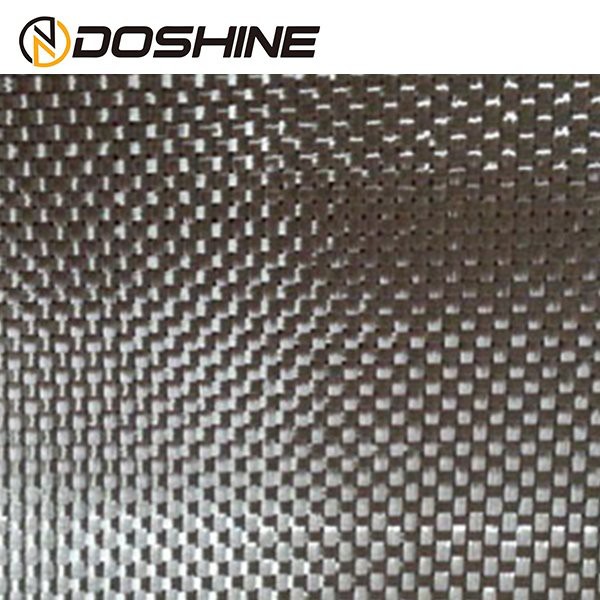
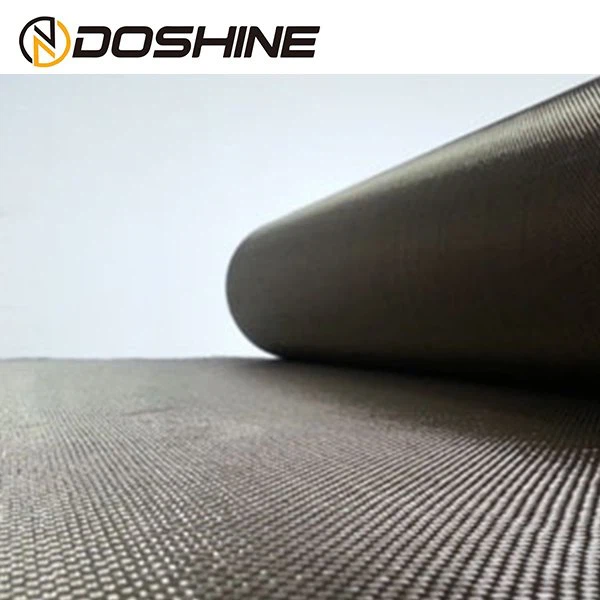
Basalt fiber is a continuous fiber drawn from natural basalt. Basalt stone is a continuous fiber formed by melting at 1450 ℃ ~ 1500 ℃ and high-speed drawing through a wire drawing leakage plate. The color of pure natural basalt fiber is generally brown. Basalt continuous fiber not only has high strength, but also has many excellent properties such as electrical insulation, corrosion resistance, high temperature resistance and so on. His production process produces less waste and less environmental pollution, and the products can be directly degraded in the environment without any harm. It is a kind of green and environmental protection material.
Excellent Team
We also have a very excellent team with professinal experiences for global purchasing. One of our competitive service is purchase agent service.
Our Service
Doshine adheres to the business philosophy of quality, innovation and service, strict manufacturing process, reliable performance quality, and mature manufacturing process technology.
Quick Response
We will reply you within 12 hours after receiving theinquiry.Tell us what you need. We have R&D team with abilities for new product customization.
Competitive Price
We can help customer search any product in China or Asia to get the best quality with lower cost. We will try our best to let you get a more efficient procurement.
Definition of Basalt Fiber
Basalt fibers are produced from basalt rocks by melting them and converting the melt into fibers. Basalts are rocks of igneous origin. The main energy consumption for the preparation of basalt raw materials to produce of fibers is made in natural conditions. Basalt continuous, staple and super-thin fibers are produced and used. Basalt continuous fibers (BCF) are used for the production of reinforcing materials and composite products, fabrics and non-woven materials. Basalt staple fibers - for the production of thermal insulation materials. Basalt superthin fibers (BSTF) - for the production of high quality heat and sound insulating and fireproof materials.


Benefits of Basalt Fiber
Basalt fiber is a mineral-based material, made of basalt rock that comes from deep under the earth's surface. The application of basalt fiber growing in different types of industrial fields, this is due to the many advantages that basalt fiber has, making it superior to any advantages of other fibers. Below we will mention the most important advantages of basalt fiber, which make it the best type of fiber:
Non-corrosive
Non-corrosive advantage for basalt fiber, make it impervious to attacks from alkali, chemicals, or water. This advantage makes it resistant to attack by acids, salts, and other corrosive substances.
Nature friendly
Basalt fiber has a very important advantage, that all the world nowadays cares about it, that basalt fiber environmentally friendly, non-toxic and does not contain heavy metals.
Sustainable
Sustainable advantage in that mean, that their life span can exceed 100 years in many cases, unlike steel fiber which does not exceed 35 years in some cases.
Recyclable
Basalt fiber has an advantage that can be recycled 100%, which means it can help reduce your carbon footprint. Basalt fiber can be recycled easily through air or water filtration and reused in other products, such as construction, manufacturing, and electronics applications, which is a good in many fields.
Low production cost
This an important advantage, basalt fibers are made from basalt stone, which is abundant on the earth and easy to be processed. Therefore, it has low production costs, which make it an advantage where many company looking for.
High tensile strength
Another for basalt fiber, that it is offers a unique combination of strength, toughness and affordable solution for any construction needs; its tensile strength is 2.5 times that of steel.
Moisture resistant
Basalt fiber concrete has moisture resistant and temperature extremes more effectively than steel, wood, or plastic reinforcements, so it can be used in many outdoor applications such as bridges, roads, boat decks and marine construction.
Human safety
Another important for basalt fiber, that it's particles or fibrous fragments due to abrasion are too thick to be inhaled and deposited in the lungs, so it can't harm human, but care in handling is recommended.
Basalt Fiber Applications in Construction
In the panorama of construction materials, basalt fiber emerges as a robust and eco-friendly alternative to conventional materials like steel and fiberglass. Heralded for its exceptional properties, such as high tensile strength, resistance to corrosion, and excellent thermal insulation, the applications of basalt fiber stretch far and wide.
• Reinforcement material
One of the most notable basalt fiber lies in its role as a reinforcement material in construction. The integration of basalt fiber in construction projects enhances the longevity and durability of structures, thanks to its excellent mechanical properties and resistance to environmental factors. Basalt fiber reinforced polymers (bfrp) are increasingly being used to reinforce concrete, replacing traditional steel reinforcements and offering superior strength and corrosion resistance.
• Insulation
In addition to providing structural strength, another significant application of basalt fiber is in thermal and acoustic insulation. The natural properties of basalt fibers make them an excellent material for insulation purposes, keeping buildings warm in winter and cool in summer, while also providing excellent soundproofing capabilities.
Basalt fiber is a relative newcomer to fiber reinforced polymers (FRPs) and structural composites. It has a similar chemical composition as glass fiber but has better strength characteristics, and unlike most glass fibers is highly resistant to alkaline, acidic and salt attack making it a good candidate for concrete, bridge and shoreline structures.
Compared to carbon and aramid fiber, it has the features of wider application temperature range -452° F to 1,200° F (-269° C to +650° C), higher oxidation resistance, higher radiation resistance, higher compression strength, and higher shear strength. (Note that application temperatures of FRPs are limited by the glass transition temperature of the matrix, which is lower than the application temperature of the fibers.)
The price of fibers made from basalt is higher than those made of E-glass, but less than S-glass, aramid or carbon fiber and as worldwide production increases, its cost of production should reduce further.


Basalt fibers are fabricated by melting crushed basalt rocks at 1400°C and drawing the molten material. Basalt fibers have better mechanical and physical properties than glass fibers, their main advantages being: fire resistance, good resistance to chemically active environments, vibration and acoustic insulation capacity.
The improved production facilities and quality control capacity enable fabrication of basalt fibers with high quality and low variability of properties. Basalt fibers are more expensive than E-glass fibers, but much cheaper than carbon fibers.
A brand new type of high-performance, environmentally beneficial, and eco-friendly fiber known as BFs performs very well and is employed extensively across a variety of industries. However, owing to their superior mechanical qualities, Basalt Fiber is a rapidly developing material in concrete materials. Compared to PVA fiber, it is much stronger in terms of TS, elastic modulus, and density. In alkaline solution, it exhibits strong chemical stability and corrosion resistance.
Basalt Fiber is a kind of synthetic inorganic fabric manufactured from basalt rock, an igneous rock created from solidified lava, is often used in clothing. Crushed basalt rock is heated to a molten condition at a temperature of around 1400 °C and then passed through tiny nozzles to create continuous BF filaments.

Is Basalt Fiber Better Than Glass Fiber
Thermal conductivity at 23 °C and 200 °C for basalt-, E-glass- and carbon composites in thickness and in fiber direction. With regard to the investigation of basalt fibers as a relatively new reinforcing fiber for polymer matrix composites new insights on the thermal response could be gathered in this work.
Basalt fibers show higher mechanical properties compared to glass fibers at low temperatures, yet they show a more severe softening at higher temperatures or a longer period of thermal load. It could be shown that a crystallization process begins in the basalt fibers, which is not visible in glass fibers, at least in this temperature range. Carbon fibers show much higher mechanical properties compared to glass and basalt fibers up to 500 °C. Yet in contrast to these fibers, they break and decompose at higher temperatures.
The bonfire test contains temperatures over 600 and 800 °C for different time periods. Therefore basalt fibers on the outside will lead to a longer heat resistance while carbon fibers on the inside will provide the required strength for the high pressure.

Fiber content varies but is generally approximately 3% to 7% of the cementitious material weight or 1% to 3% by total concrete weight. Increased fiber content adds strength but decreases workability.
Common water to cement ratios used from 0.25 to 0.35. (25-35% by cementitious material weight)
Basalt Chopped Fibers can be mixed directly into polymers and concrete to increase tensile strength, reduce cracking and chipping.
Perfect for mortar and concrete reinforcement applications; all decorative applications as countertops, fireplace surrounds.
Basalt Fiber has a similar chemical composition as regular glass fiber but Basalt Fiber has better strength characteristics, and unlike most glass fibers is highly resistant to acidic and salt attack and alkaline, making it a good option for concrete, bridge and shoreline structures.
Compared to carbon and aramid fiber, Basalt Fiber has the features of wider application temperature range -452° F to 1,200° F (-269° C to +650° C), higher compression strength and higher shear strength, radiation resistance and higher oxidation resistance.
A brand new type of high-performance, environmentally beneficial, and eco-friendly fiber known as Basalt Fiber performs very well and is employed extensively across a variety of industries. The purpose of BFs to enhance the mechanical characteristics of regular concrete has recently attracted the interest of numerous scholars, and various suggestions have been documented in the literature. However, owing to their superior mechanical qualities, Basalt Fiber is a rapidly developing material in concrete materials. Compared to PVA fiber, it is much stronger in terms of TS, elastic modulus, and density.
In alkaline solution, it exhibits strong chemical stability and corrosion resistance. Basalt Fiber is a kind of synthetic inorganic fabric manufactured from basalt rock, an igneous rock created from solidified lava, is often used in clothing. Crushed basalt rock is heated to a molten condition at a temperature of around 1400 °C and then passed through tiny nozzles to create continuous BF filaments. The inclusion of Basalt Fiber means that the mechanical characteristics are enhanced, and they may also be used as reinforcement for concrete, according to preliminary studies.
Is Basalt Fiber Strong
|
Property |
Value |
|
Tensile strength |
2.8–3.1 GPa (410–450 ksi) |
|
Elastic modulus |
85–87 GPa (12,300–12,600 ksi) |
|
Elongation at break |
3.15% |
|
Density |
2.67 g/cm3 (0.096 lb/cu in) |
JIAXING DOSHINE NEW MATERIAL CO., LTD. is the leading global supplier of various high performance materials. We are mainly supplying carbon fiber prducts (chopped strands, veil, cloth, and other related products), aramid fiber products, basalt fiber products, and other new materials.
These products are widely used in automobile parts, pressure vessel, hull, sports equipment, medical equipment, sound trough, friction and seal material.
2012, Doshine(Hongkong) company established, and we have our first team to service our customers which have been exporting various of materials to the oversea markets.
We also can supply a wide range of products to meet ever-changing market demands. Customized orders are welcomed. Trust us, and we will try our best to let you get a more efficient procurement.
